Sep 14, 2026Technical Guides
What Is Natural Wood Veneer on Aluminium?
Natural wood veneer on aluminium is real wood bonded to engineered aluminium substrates. See how it differs from printed wood-grain aluminium and what product forms exist.
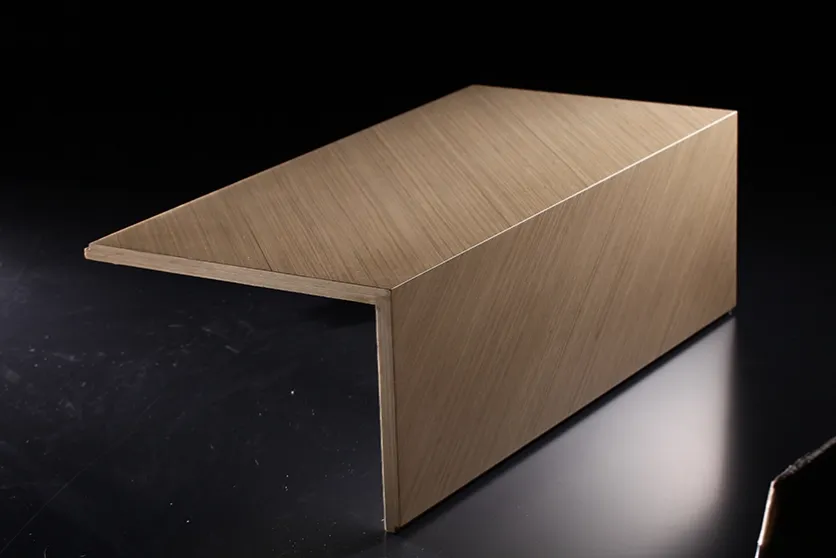
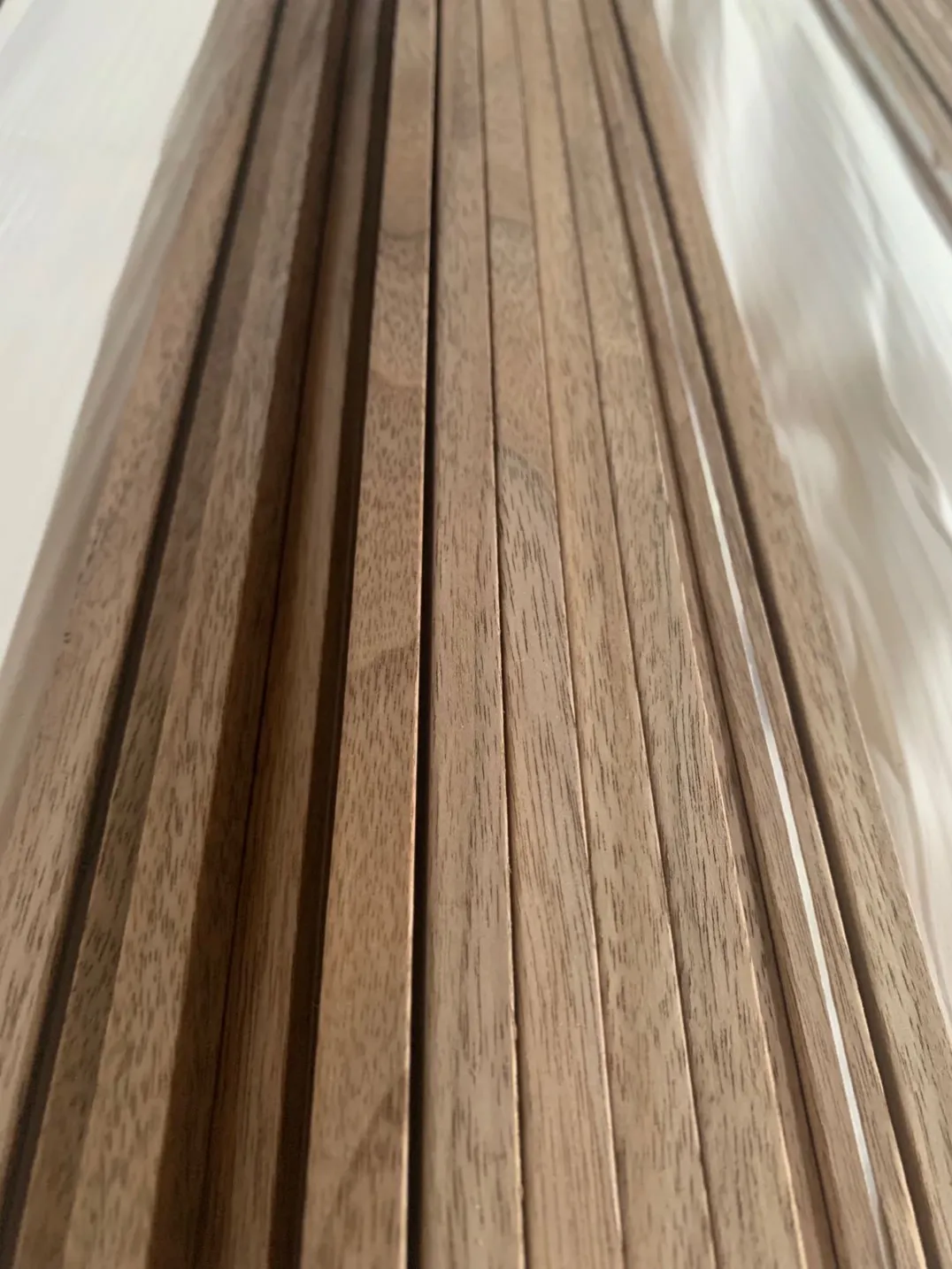
Natural wood veneer on aluminium (also spelled aluminum) is a real wood veneer surface bonded to engineered aluminium substrates such as sheets, profiles and honeycomb panels. It is not printed wood-grain aluminium and not a wood-effect powder coating: the surface is genuine natural wood.
Real Veneer, Not a Printed Pattern
Wood-look aluminium usually means a printed transfer film or a wood-effect coating. The products described on this website use natural wood veneer, a thin layer of real wood, as the visible surface. The difference matters for appearance, for how joints and edges look, and for how samples should be compared.
The supplier catalogue also includes other surface materials, such as engineered veneer, bamboo veneer, films, fabric and leather. A wood-like appearance alone is not enough to identify the finish, so the surface material should be confirmed for each sample and order. Traditional wood panelling is still widely used. Where an enquiry involves curved sections, ceiling zones or large panel formats, veneered aluminium is often raised as an alternative; suitability is confirmed for each enquiry.
Three Product Forms
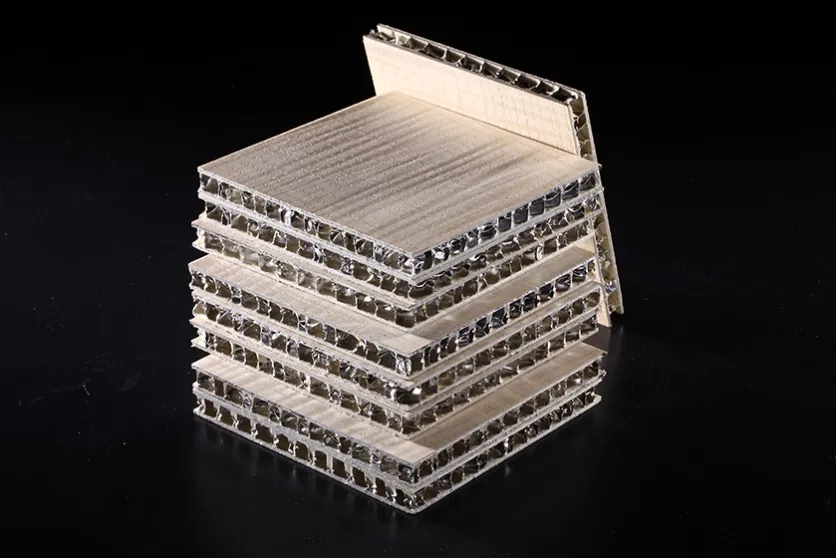
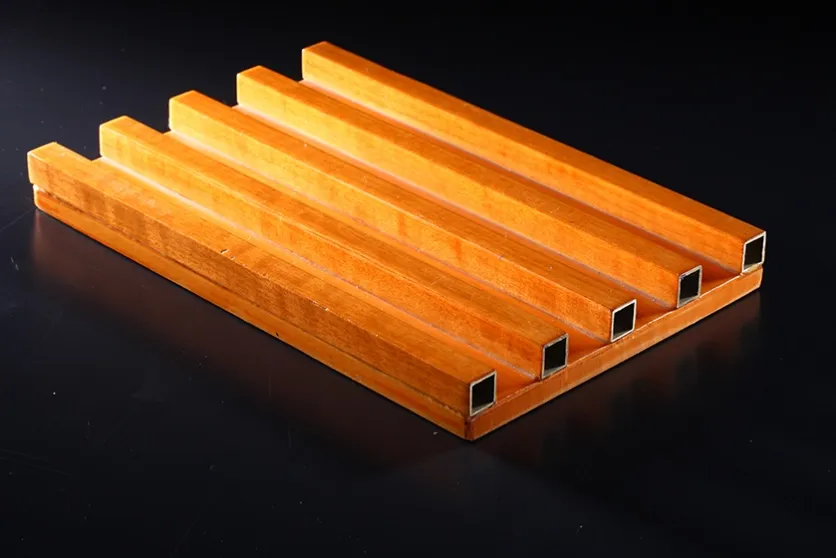
Sheet: veneer bonded to formed aluminium sheet, used for wall panels, column covers and curved details. Profiles: veneer on aluminium sections used for linear ceiling features, wall details and screens. Honeycomb panels: a veneer face over an aluminium honeycomb construction used for interior panel enquiries.
How It Is Made, in Simplified Terms
For sheet products, the supplier catalogue describes fabrication to drawing, surface preparation, primer, veneer bonding, and coating and sanding. The actual process and finish for an order are checked with the manufacturing partner for the proposed part.
Where It Is Used
Typical enquiry areas are interior wall and ceiling panels, column covers and curved details, decorative screens and partitions, and joinery or furniture components. Project suitability is confirmed for each enquiry.
To see the product forms in detail, visit the products pages on this website. To discuss a specific part, send your drawing through the contact page.