Technical Guides
Matching Existing Wood Tones: Colour Matching for Veneered Aluminium
Matching an existing timber tone on aluminium panels is a sampling exercise, not a colour-chart pick. How to run the process so the approved sample is the delivered panel.
The most common colour problem in wood-look aluminium is not choosing the wrong tone from a catalogue — it is expecting a catalogue tone to match a real surface: an existing timber floor, a walnut veneer reception desk, a previously approved panel batch. Real matching is a physical sampling loop, and running it well is what separates a seamless installation from a visible patchwork.
Why a Swatch Is Not a Match
Three factors change how an identical coating reads on site:
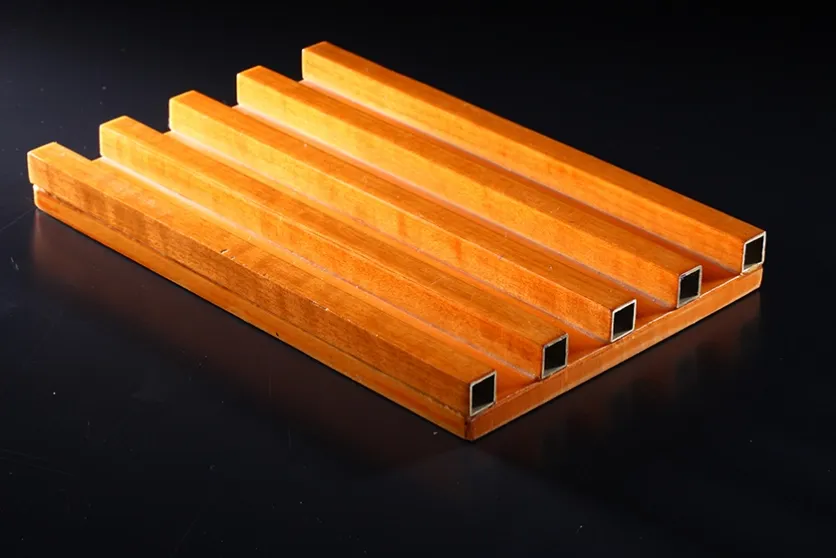
- Substrate and grain depth. The same wood-grain transfer over a deep fluted profile reads darker than over a flat panel, because the grooves shadow the print.
- Orientation and lighting. Horizontal panels under downlights read lighter than vertical panels in reflected daylight. Warm-toned woods shift noticeably under 3000K versus 4000K lighting.
- Direction of grain. Panels with horizontal grain reflect differently from vertical ones, even in the same batch.
This is why suppliers cannot guarantee a match from a photograph. The lighting that your phone adds to a picture of your floor is a lie the sample has to correct.
The Sampling Loop That Works
- Send the reference. A physical offcut of the target surface beats every photo. If that is impossible, send the largest clean photo taken in daylight, straight on, no flash — and expect one extra sampling round.
- Approve a coated sample, full size or A5 minimum. The sample must be the finished panel: same substrate thickness, same coating system, same grain depth.
- View it on site. Check the sample against the reference under the actual lighting of the space, both horizontal and vertical if both exist.
- Freeze the approved sample. The signed sample becomes the batch standard. Every production panel is judged against it, not against the catalogue.
Batch Consistency Across Large Orders
For orders spanning multiple production runs, ask for batch retention: the supplier keeps coating parameters and control samples so later batches track the approved one. Colour drift between batches is normal in any coating process; what matters is whether the supplier measured it against a retained standard or just mixed new coatings from a formula sheet.
Where Splits and Transitions Land
On mixed projects — timber doors with aluminium wall panels, or old and new zones — plan the transition line deliberately. The cleanest detail puts the material change at an internal corner or a shadow gap, where small tone differences read as intentional depth instead of a mismatch.
Start Early
Colour matching adds one to two sampling rounds, each a few working days. Build it into the programme before production, not after the panels arrive. If you have a reference surface to match, send a sample or a good daylight photo with your enquiry and the first candidate samples can be produced with the quotation.